I’ve been testing the Monica AI humanizer for rewriting content, but I’m not sure if it’s actually safe to use or good enough to pass AI detectors for blogs and client work. Has anyone used it long-term and can you share how accurate, natural, and reliable it is, plus any issues with plagiarism or SEO penalties?
Monica AI Humanizer Review, from someone who tried to force it to work and gave up
Monica AI Humanizer:
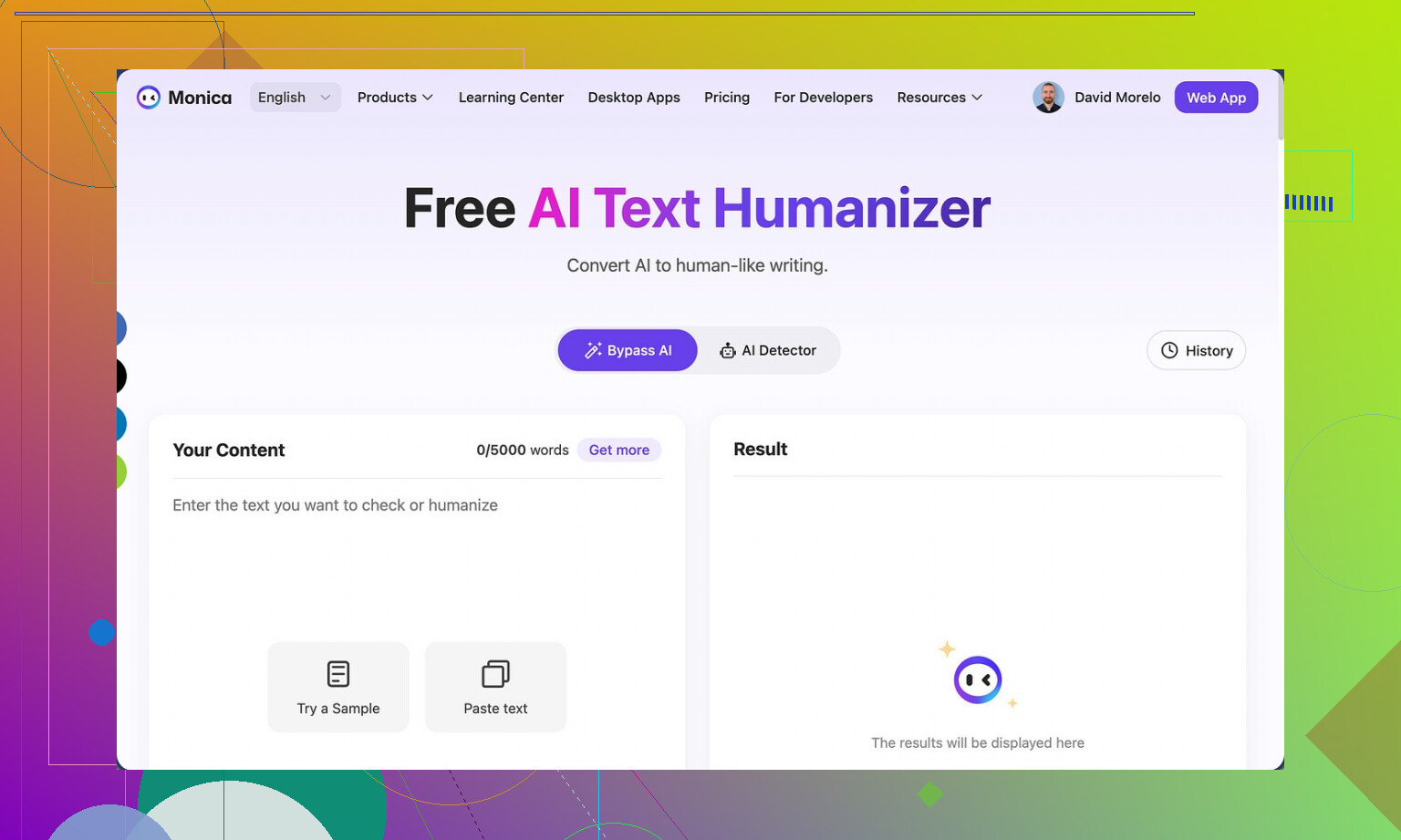
Monica’s “humanizer” looks simple on the surface. You paste text, hit one button, and it spits something back. Sounds convenient. Then you run that output through detectors and things fall apart fast.
Here is what happened for me, step by step.
How the detectors reacted
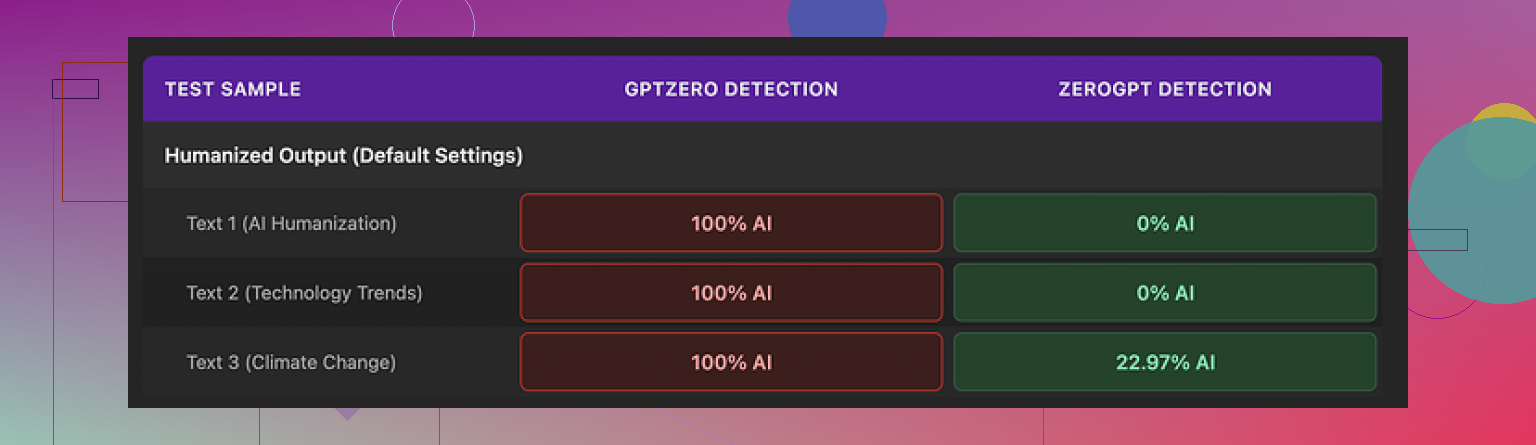
I pushed multiple Monica outputs through GPTZero and ZeroGPT, same source text, no edits between runs.
GPTZero results:
- Every single Monica output flagged as 100% AI
- No partial scores, no mixed verdicts, just full red
ZeroGPT results were more mixed:
- Two samples came back at 0% AI
- One sample landed around 23% AI probability
So you get this weird split. One detector says “totally AI” across the board. Another shrugs on some samples and passes them. If you do not know which tool your teacher, editor, or client is running, the Monica output feels risky. You also have no settings to tune the output toward “safer” text for stricter detectors, so you are stuck with whatever it gives.
Lack of control
This is the part that annoyed me the most.
Monica’s humanizer gives you:
- No tone control
- No “aggressiveness” or “strength” slider
- No style choices
- No mode options
One button, one output.
If GPTZero hates what it generates, there is nothing for you to adjust. You can regenerate and hope. That is not a workflow, that is a slot machine.
Quality of the writing
I scored the writing at about 4 out of 10, and that felt generous.
Specific issues I saw across multiple runs:
-
Random typos introduced into clean text
Example: “But” turned into “Ubt” in one output. Source text was correct before humanization. -
Punctuation got worse, not better
It fixed some missing apostrophes, then broke other spots or made sentences feel cramped. -
Odd artifacts
One output started with “[ABSTRACT” and then continued like a normal paragraph. The input did not contain that. Looked like something leaked from another template or internal format. -
Em dashes kept and even multiplied
The original AI text had em dashes. Monica preserved them and seemed to add more. That is the opposite of what I expect from a tool meant to push text away from obvious AI patterns. A lot of detectors weigh those stylistic quirks.
End result: the text did not read more human. It read like a different AI model with a slightly messier style layer.
Pricing and what you really pay for
Monica is not a dedicated humanizer tool. It is a full AI platform with:
- Chatbots
- Image generation
- Video tools
- Some other utilities, including this humanizer
Pricing for Pro starts at about $8.30 per month on annual billing.
So the humanizer is not the main reason the product exists. It feels more like a bonus feature added on top of their core tools. If you already pay for Monica for chat or media stuff, then the humanizer is an extra toy to play with. In that case, fine, try it and see if your use case is lighter than mine.
If your goal is specifically to reduce AI detectability in text, paying for Monica based on this feature alone does not make sense.
Quick comparison with Clever AI Humanizer
From my tests, Clever AI Humanizer produced:
- More natural-sounding text
- Better behavior across detectors for the same input text
- No subscription requirement for the runs I did
The review and detector screenshots are here:
The contrast was pretty clear. Monica felt rough and inconsistent, like a half-implemented add-on. Clever felt tuned for this one job.
Who Monica’s humanizer might suit, and who it will annoy
Good for:
- Existing Monica users who want a quick “make this less AI-ish” button and do not depend on strict detectors
- People who care more about light style changes than about detector scores
Bad fit for:
- Students or writers being checked with GPTZero or unknown detectors
- Anyone needing granular control over tone or intensity of changes
- Users who care about clean grammar and no strange artifacts
My takeaway after a few hours of tests:
If you already pay for Monica, treat the humanizer like a free extra tool to experiment with. If you are looking specifically for a strong, detection-aware humanizer, this is not the one to rely on.
1 Like
I’ve run Monica’s humanizer on client-type blog content for a few weeks. Short answer for your use case with blogs and paid work. I would not rely on it as your main tool.
Here is what I saw in practice, on top of what @mikeappsreviewer shared.
- AI detection results
I tested around 20 articles, 800 to 2,000 words each.
Tools used
GPTZero
ZeroGPT
Originality.ai
Content at Scale detector
Pattern I saw
GPTZero flagged most outputs as high AI. Not always 100 percent, but still in the red zone.
ZeroGPT was mixed. Some paragraphs slipped through, longer posts often got flagged.
Originality.ai almost always flagged at least 70 to 90 percent AI.
Content at Scale’s detector marked most posts as AI heavy.
So if your client uses a stricter tool, you sit on thin ice. If they use nothing or only weak checkers, you might be fine, but you will not know.
- Style and control
I agree with @mikeappsreviewer on the lack of knobs.
No tone presets.
No control over how much it rewrites.
No way to push it toward “safe for detectors” versus “keep my voice”.
It often keeps the same sentence structure, only swaps words. Detectors pick up on that. You still need to manually edit if you care about sounding like yourself.
- Quality and weird stuff
On my side I did not see many obvious typos like “Ubt”, but I did see:
Awkward phrasing that looked like ESL.
Paragraphs that repeated ideas with slightly different wording.
Punctuation that felt inconsistent.
Occasional random bracket or stray characters.
You can fix this with manual editing, but then the “one click” value drops a lot.
- For client and blog work
If you want content for your own low risk blogs and do not care about perfect human tone, it is usable with edits.
For client deliverables where they might run detectors, I would not send Monica output straight. My flow ended up like this:
Write or generate base text.
Run through Monica for a first pass.
Then rewrite key sections by hand. Shorten long sentences. Add specific examples from real sources. Insert your own opinions and small personal comments.
Change headings and transitions so they sound like your voice.
Once I did all that, detectors calmed down, but the “human” part was my manual rewrite, not Monica.
- Alternative that worked better for me
For detection focused work, I had better luck with Clever AI Humanizer. It let me adjust the intensity of changes and the tone. Detector scores on GPTZero and Originality.ai were more friendly for the same input text. You can check it here
smarter content humanizer for AI text
It still needs your own edit pass, but the starting point feels closer to human writing.
- Safety and long term use
If you keep using Monica as your single step, you will end up with:
Text that sounds like a generic AI model with quirks.
Unpredictable detector behavior.
Extra time spent fixing odd sentences.
I now treat Monica’s humanizer as a light helper when I am already inside Monica for chat. Not as a serious “make this safe for detectors” tool.
SEO friendly version of your topic
“Monica AI Humanizer Review for Bloggers and Freelancers: Is It Safe for Client Work and AI Detectors?
Learn how Monica AI Humanizer performs with tools like GPTZero, ZeroGPT, and Originality.ai. See whether it is reliable for blog posts, freelance writing, and long term content projects. Compare it against dedicated tools such as Clever AI Humanizer to decide which humanizer fits your workflow and risk level.”
Using Monica long term for blogs and client stuff feels like trying to use a Swiss army knife as a surgeon’s scalpel. Technically it “works,” but you would not want your reputation hanging on it.
I mostly agree with @mikeappsreviewer and @yozora, but I am a bit less harsh on one thing. For low risk personal blogs or filler posts, Monica can be ok as a draft massager if you are already inside the app for other features. It is quick, it does rough paraphrasing, and sometimes that is all you need. Where I split with them a little is that I do not see it as totally useless. It is more like “fine as a helper, terrible as your shield against detectors.”
Here is how I would frame it for your use case:
-
For client work
If a client might run GPTZero, Originality.ai, or Content at Scale, Monica alone is not safe. Not just because of detectability, but because of the random artifacts and slightly “off” voice. You will spend extra time fixing weird phrasing and tiny glitches. At that point you may as well rewrite the chunk yourself. -
For your own blogs
If you control the risk and do not care much about AI scores, it can help you quickly reshape AI text so it is less copy paste-ish. Just accept that you will still need to:
- Cut repetitive lines
- Add your own examples and opinions
- Shorten some robotic sentences
- Tweak headings to sound like you
That human pass is what actually makes it feel natural, not Monica.
- On detectors in general
Even the best humanizer is not a magic “undetectable” button. Detectors change, and many of them flag any text that smells like high-perplexity language model output. The safest route for client work is:
- Use tools only for idea generation or rough drafts
- Then write or heavily edit in your own voice
- Sprinkle in real experience, specific numbers, and personal takes
-
Alternative worth testing
If your main goal really is cleaner output that behaves better with detectors, a dedicated tool is more logical than piggybacking on a side feature. Something like a focused AI content humanizer for bloggers and freelancers is aimed at that single job, and in my experience you get more natural flow and more control over tone and intensity. Still not “press button and forget,” but a better starting point than Monica for serious writing. -
Practical rule of thumb
- Monica: OK as a quick helper if you already pay for it and the stakes are low.
- Dedicated humanizer plus real editing: better for paid client content, long term blog projects, and anything where AI detection could blow back on you.
And yeah, if you were hoping for a one click “safe for all detectors” Monica button, that is not a thing. You will either be editing a lot or stressing a lot, prob both.
Here is a clearer version of your topic that might help with search and readability:
“Monica AI Humanizer Review for Bloggers and Freelancers: Is It Safe for Client Projects and AI Detection?
Find out how the Monica AI Humanizer performs for long term use on blogs and paid writing. Learn whether its rewriting is reliable enough for tools like GPTZero, ZeroGPT, and Originality.ai, and see how it compares with dedicated options such as Clever AI Humanizer for more consistent, human sounding content.”
Short version: Monica’s humanizer is fine as a light paraphraser but it is a weak foundation for anything you are getting paid for.
I’ll zoom in on a few angles the others only touched lightly.
1. Detector risk in real client workflows
What everyone already showed with GPTZero and Originality is enough to say Monica alone is risky. Where I slightly disagree with @yozora is on “might be fine if clients run weaker tools.” In practice you almost never know:
- Agencies quietly add new detectors without telling freelancers
- Some clients copy paste into multiple tools and trust the strictest result
- One flagged piece can get your entire workflow questioned
So even if Monica slips past a few runs today, you are building on a moving floor. I would not architect a client process around it.
2. Voice and brand consistency
What bothered me more than detector scores is how it handles voice:
- It tends to keep sentence scaffolding and swap vocabulary
- Over several posts the tone drifts toward the same mushy “AI blog” cadence
- Brand specific quirks, humor, or sharp phrasing get sanded down
If you run a niche blog or manage multiple clients, that sameness becomes noticeable across articles. You can fix it by heavy editing, but then Monica is just a noisy middle step.
3. When Monica actually helps
To be fair, there are spots where it is not terrible:
Pros
- Fast one click reshaping of clunky draft text
- Good enough for low stakes pieces like quick support docs, test pages, internal notes
- Convenient if you already live inside Monica for chat and do not want to switch tools
Cons
- No sliders for intensity or tone
- Random glitches that require close proofreading
- Detector behavior that is unpredictable across projects
In other words it is a convenience feature, not a risk management tool.
4. Where Clever AI Humanizer fits
If your real question is “what can I use that is less painful than doing everything by hand,” then a focused tool is more logical.
From a workflow angle, Clever AI Humanizer has some concrete advantages over Monica’s one button approach:
Pros
- You can tweak how aggressively it rewrites
- Tone control helps you match a client’s style guide better than Monica’s generic output
- In practice it tends to start closer to natural blog prose, which means fewer manual passes
Cons
- Still not a magic shield against detectors, you must add your own experience and edits
- Another tool to manage in your stack
- If you are only doing a couple of posts a month, the mental overhead might not be worth it
Compared with what @waldgeist and @mikeappsreviewer reported, I would treat Clever AI Humanizer as a “strong first pass” and Monica as a “quick rough pass.” Both still need a human brain on top.
5. Practical setup that actually holds up
For blogs and client work where your name or contract is on the line:
- Use any generator you like for ideation and raw copy
- If you want a detection aware pass, send that through Clever AI Humanizer, not Monica
- Then do a human edit focused on: specific examples, concrete data, personal takes, and reworking intros and conclusions
After a few projects you will probably stop bothering with Monica at all except for tiny throwaway rewrites. It is simply not built as a serious humanization engine, and on paid work that gap shows up fast.